Rules · 7 min read
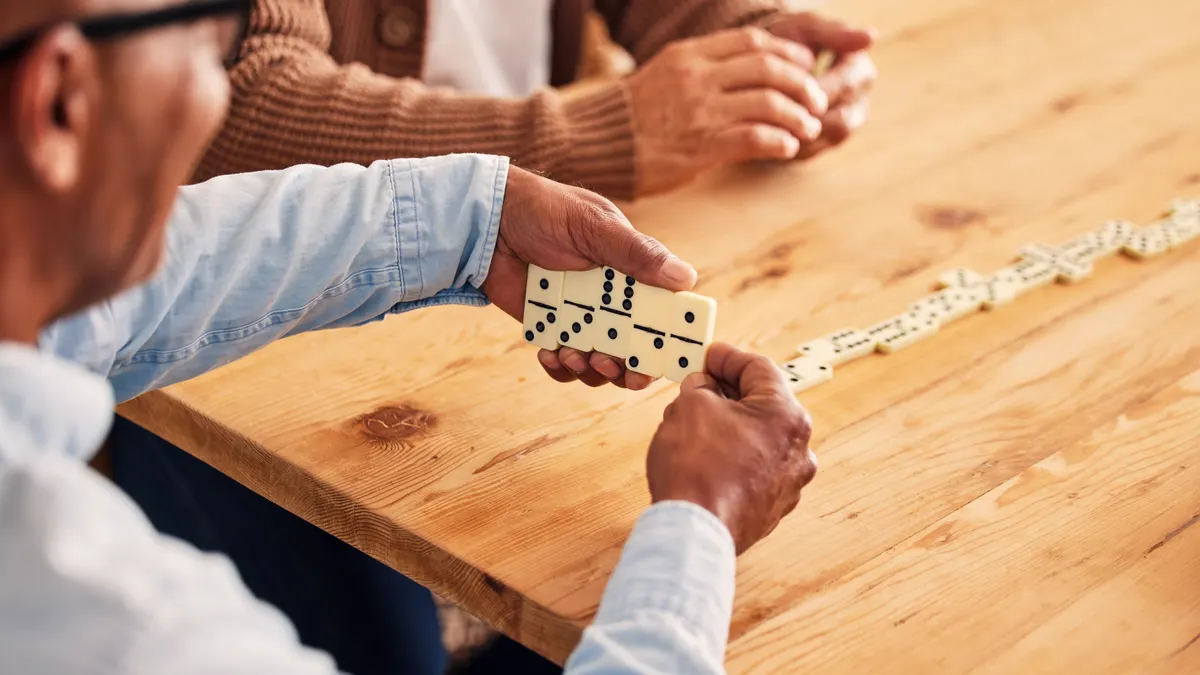
Do doubles have to be played crossways in dominoes?
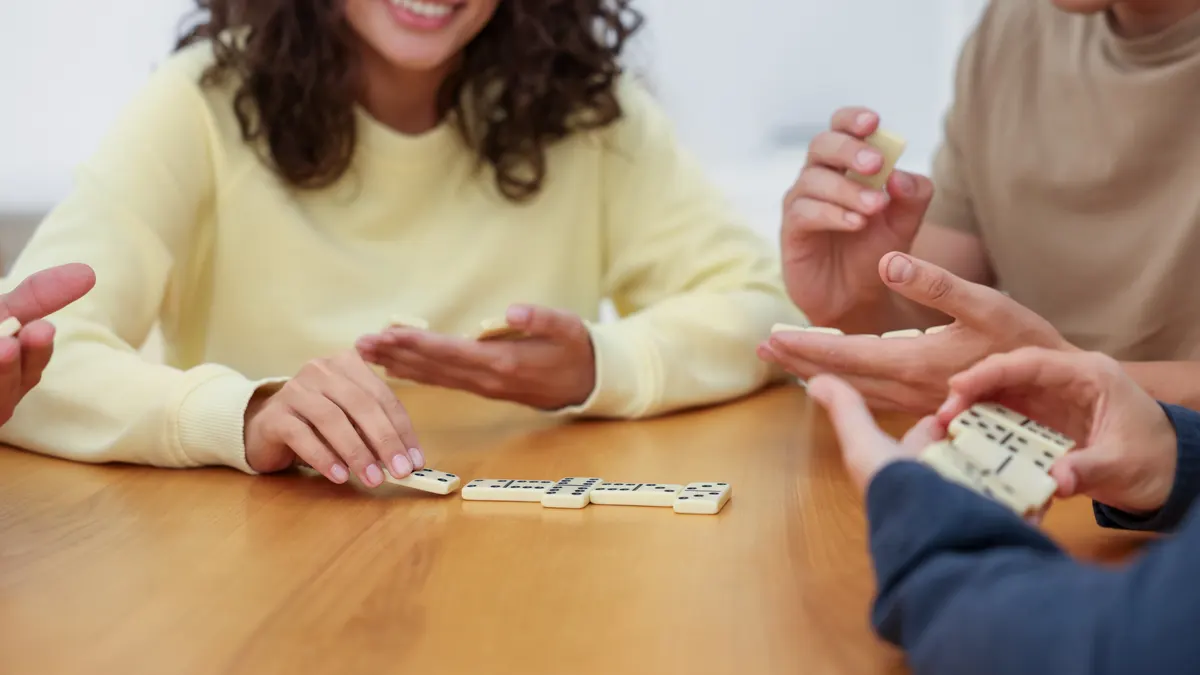
Crossways doubles are a convention, not a law. Which games make a double a spinner, when both halves count, and the house rules to agree first.
Dominoes
How the game is played, scored and won. The rules people actually use, the variants that differ from table to table, and the thinking that separates a good player from a lucky one.
Written for players
Rules you can take to a table tonight, not a history lecture.
A new article every day
Rules, scoring, strategy, variants and the culture around the table.
No single right rulebook
Dominoes is regional. We say which tradition a rule belongs to.
Rules · 7 min read
Crossways doubles are a convention, not a law. Which games make a double a spinner, when both halves count, and the house rules to agree first.
Equipment · 7 min read
Bone and ebony, Bakelite, urea, melamine, wood and stone: what domino tiles are made of, what the brass pin is for, and what to check before you buy a set.
Culture · 7 min read
Which way play goes, who shuffles, knocking or saying pass, slamming tiles, and table talk: the domino etiquette that changes from table to table.
Rules · 8 min read
Ends that add to seven, the four matadors that play anywhere, blanks that close an end, and where the written rules disagree on deal and score.
Teaching · 6 min read
A ten-minute lesson plan for teaching dominoes: which game to start with, the five rules to explain, and a face-up first hand that does the rest.
Rules · 8 min read
The double that grows three toes, deal counts by set size, the 50-point double blank — and where two written rule sets disagree.
Culture · 7 min read
A capicú is a winning last tile that fits both ends of the line. Some tables pay 100 points for it, some one extra point, and many tournaments nothing.
Strategy · 7 min read
You do not memorise 28 tiles. Count numbers, not tiles, log every pass, and late in the hand you can often name every tile still out.
Rules · 8 min read
Deal counts, the engine, personal trains, markers and the double that must be covered — with the places where two written rule sets disagree.
Teaching · 7 min read
Nine mistakes new players make, from sitting on bare doubles to knocking with a playable tile, and the habit that fixes each one.
Strategy · 7 min read
With two players, half the set sleeps or the whole set is visible. How that changes counting, passes, holding a number and block vs draw.
Rules · 8 min read
Clocks, timed turns, saying pass instead of knocking, and point penalties for misplays: what four real tournament rulebooks change.
Strategy · 7 min read
A pass proves a player holds neither number on the ends. Where those tiles must be instead, worked odds, and how draw games change it.
Strategy · 7 min read
When your rules let you choose the first tile, lead the double of your longest suit. Who gets to choose, the odds behind it, and when to break the habit.
History · 7 min read
Tiles in Song-dynasty China, a 28-tile game in 18th-century France, and a gap between them nobody has closed. What the sources actually show.
Equipment · 7 min read
Set size decides how many can play, how big each hand is and how long a game runs. What each set holds, and which games each one is for.
Rules · 8 min read
All Fives scores every play that makes the open ends a multiple of five. Here are the rules, how the spinner counts, and worked examples of smarter plays.
Strategy · 7 min read
In partnership dominoes you play fourteen tiles, not seven. How to read your partner's lead, keep their number open, and signal within your table's rules.
Rules · 7 min read
When a domino game blocks, the lowest hand usually wins, but traditions split on whose pips count and who takes a tie. Here is how to see a block coming.
Strategy · 7 min read
The deal decides your seven tiles; counting decides what they are worth. Exact odds for doubles, long suits, unseen tiles and passes, worked out.
Rules · 7 min read
Most domino games score the pips left in losing hands, score fives during play, or award one point per hand. Here is how each works, with numbers.
Strategy · 6 min read
The deal is luck. Counting tiles, reading passes, holding a suit and choosing the first tile are skill. Here is how each one works at the table.
Rules · 4 min read
Block, draw, All Fives, Mexican Train and partnership play use the same tiles and almost nothing else in common. Here is what changes between them.
We are building a domino game. It is not out yet, but you can be told when it is.